


Aerodigm Wealth
Reserve your seat
Live fireside chat · New research

The largest loss in your portfolio is the one you volunteered for.

The session

Uncle Sam's Cut

A century of the federal tax drag on US equity returns — and what it means for how wealth is built.

DateMonday, August 17
Time2:00 PM ET / 11:00 AM PT
Length45 min + live Q&A
FormatFireside chat, on Zoom

Attendance is capped so the Q&A stays useful. Registrants receive the full working paper and the session recording.

Register free
One step. Name and email — under thirty seconds. Zoom sends your link and reminders.
DateMonday, August 17
Time2:00 PM ET / 11:00 AM PT
CostFree

Registration is passed to Zoom, which sends the session link and reminders. Your details are used only for this session, the working paper, and the recording. No list sharing. Registering does not create an advisory relationship.

The evidence

One market. One investor. Two very different outcomes.

Growth of $1,000,000, 1996–2025Before taxAfter federal taxUncle Sam's cutHypothetical performance
$8,089,323$5,138,809$8M$6M$4M$2M1996200620162025$2.95M to federal taxes · 36.5% of terminal wealth

Source: Ang, A. (2026), Uncle Sam's Cut: A Century of the Federal Tax Drag on US Equity Returns. Hypothetical, for illustration only; not the performance of any actual account.

347bps

Average annual federal tax drag across eight overlapping 30-year windows since 1926.

538bps

The worst window, 1936–1965, when top dividend rates reached 90%.

103bps

Drag for a 70-year-old once the step-up in basis is valued — down from 165. Structure moves the number.

The frame

There are only three kinds of loss.

01

Volatility

Temporary

Prices move. Given time and discipline, this loss is recovered — it is the price of admission for the return the market pays.

02

Permanent impairment

Concentrated

One stock, one sector, one vintage, one counterparty. This is the loss that does not come back — and precisely the loss diversification exists to prevent.

03

Unnecessary tax

Voluntary

Not the tax you owe. The tax you paid because the structure around the portfolio was never designed. It compounds against you, quietly, in every year you hold.

Our discipline

Wealth Architecture

The deliberate design of how wealth is held, transferred, and released — so that the largest possible share of it arrives at the destinations you chose, rather than the one you did not.

A portfolio is a waiting room. It is where wealth sits while it waits to be spent, given to heirs, given away, or taken by the government. Those are the only four exits, and only three of them are yours to choose.

Investment selection decides how fast wealth grows. Architecture decides how much of that growth is still there at the door. Most of the industry optimizes the waiting room and ignores the doors.

Expenses
Chosen
Heirs
Chosen
Charity
Chosen
Government
Residual
Thrust and drag

We reduce drag first, because drag is the part we control.

Tax-aware design cannot eliminate tax, and no strategy can guarantee a particular after-tax result. Outcomes depend on each household's facts, holding periods, jurisdiction, and future changes in tax law.

In conversation
Andrew Ang

Andrew Ang

Our guest

Andrew Ang is at Tau Balance and an adjunct professor at Columbia University. He is the author of Uncle Sam's Cut, the century-long study of federal tax drag at the center of this session, and of current work on multifactor diversification and agentic portfolio construction.

Recent working papers: Uncle Sam's Cut (2026) · Diversification All the Way Down (2026) · The Self-Driving Portfolio (2026)
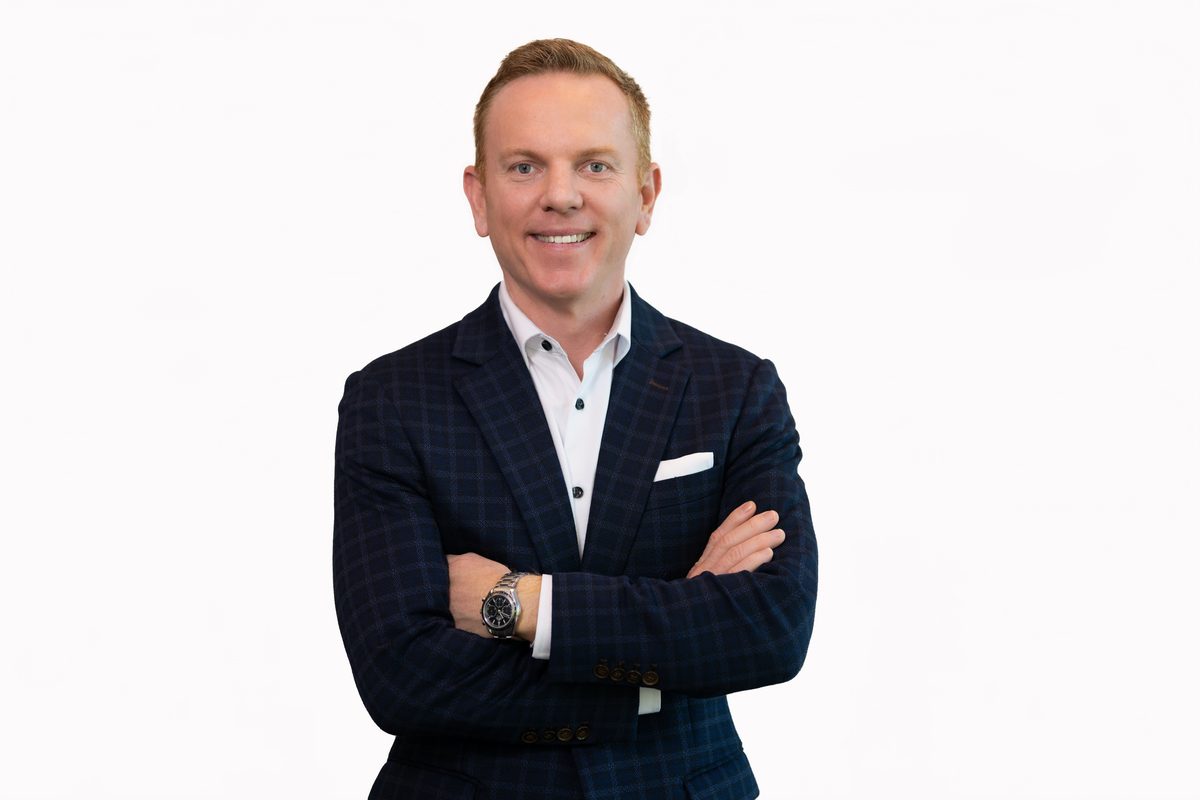

Jared Siegel

Jared Siegel

Your host

Jared Siegel leads Aerodigm Wealth, where the work is the architecture around the portfolio: how wealth is held, transferred, and released so that the largest share of it reaches the destinations a family actually chose.

The conversation

Forty-five minutes. Five questions worth your afternoon.

01

What does a taxable investor actually keep?

A hundred years of tax law, applied one Form 1040 at a time — and the number at the end.

02

Why dividends, not gains, did most of the damage

The single largest channel of historical drag — and why the character of income still governs outcomes.

03

Deferral is not forgiveness — except when it is

What the step-up in basis is really worth, at what age it starts to matter, and what it should change about selling.

04

Concentration, and the loss that doesn't come back

Diversifying a low-basis position without handing the exit to the tax code.

05

What this means for how a portfolio should be built

From research finding to design principle: asset location, gain and loss management, and sequencing against the four destinations.

Reserve your seat

It's not what you make, it's what you keep.

Monday, August 17 · 2:00 PM ET / 11:00 AM PT. Forty-five minutes with Andrew Ang, plus live Q&A. Registrants receive the working paper and the recording.

Hosted by Aerodigm Wealth. Private and confidential.
Register free
One step. Name and email — under thirty seconds. Zoom sends your link and reminders.
DateMonday, August 17
Time2:00 PM ET / 11:00 AM PT
CostFree

Registration is passed to Zoom, which sends the session link and reminders. Your details are used only for this session, the working paper, and the recording. No list sharing. Registering does not create an advisory relationship.